Free Ovulation and Fertile Window Calculator
Estimate your most fertile days and predict your next ovulation date to increase your chances of conception with this simple, private calculator.
How It Works
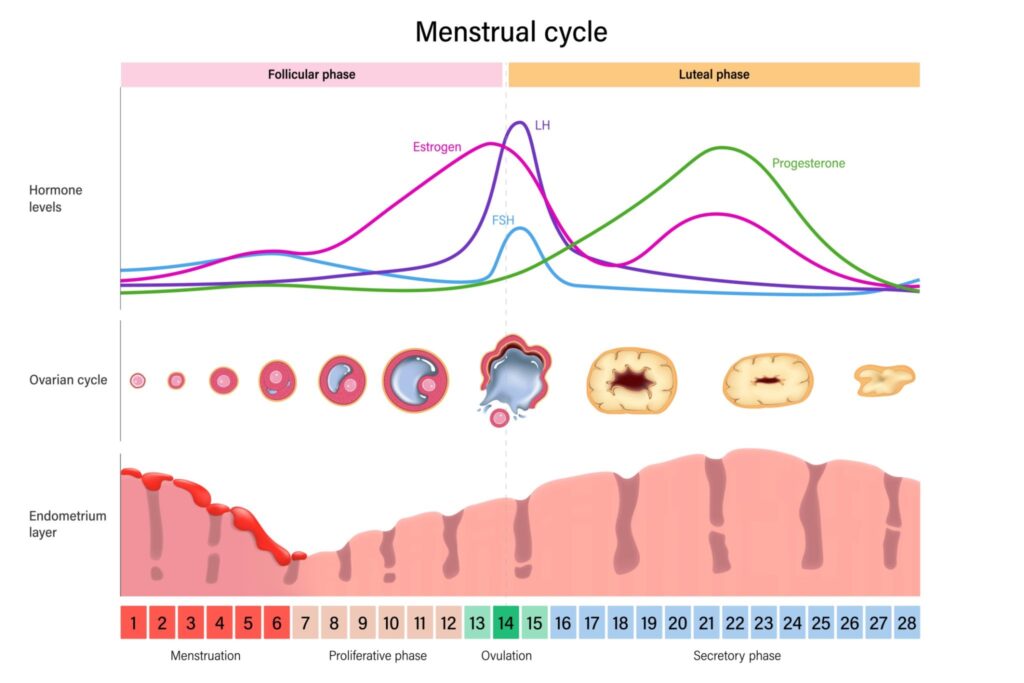
The calculator uses the “Calendar Method” (or Rhythm Method) logic, which is based on standard averages of the menstrual cycle.
- Input: You provide the first day of your Last Menstrual Period (LMP) and the average number of days in your cycle (typically 28 days).
- Calculation:
- Next Period: The tool adds your cycle length to your LMP date to predict the start of your next period.
- Ovulation: Medical standards suggest ovulation occurs approximately 14 days before the start of the next period. The tool subtracts 14 days from your predicted next period date.
- Fertile Window: Sperm can survive in the body for up to 5 days, while an egg survives for about 12-24 hours. Therefore, the fertile window is calculated as the 5 days leading up to ovulation plus the day of ovulation itself.
- Result: The tool displays these calculated dates in a clear, easy-to-read format.
Inputs
Last Period Date: A date picker to select the exact start date of your last menstrual cycle. Cycle Length: A numeric input for the average number of days between periods (default is 28).
Output
Ovulation Date: The estimated peak fertility date. Fertile Window: A date range spanning the 6 most fertile days. Next Period: Projected start date of the next cycle. Test Date: Suggested date to take a pregnancy test for accurate results.
Frequently Asked Questions
How accurate is this calculator?
This calculator provides estimates based on averages. It assumes a regular menstrual cycle and that ovulation occurs exactly 14 days before the next period. If you have irregular cycles, polycystic ovary syndrome (PCOS), or other hormonal conditions, these dates may not be accurate. It is best used as a guide rather than a definitive medical diagnosis.
Can I use this calculator for birth control?
No. You should never rely solely on a calendar calculator to prevent pregnancy. The "rhythm method" has a high failure rate because ovulation dates can shift due to stress, diet, or illness. Always use proven contraceptive methods if you are trying to avoid pregnancy.
What if my cycle length varies every month?
If your cycle varies significantly (e.g., 26 days one month, 32 days the next), it is difficult to pinpoint ovulation using just a calculator. In this case, you might calculate the average of your last 3 months, but we recommend using ovulation predictor kits (OPKs) or tracking basal body temperature for better accuracy.
When is the best time to have intercourse to get pregnant?
The highest probability of conception occurs during the "fertile window," specifically the 2-3 days leading up to ovulation and the day of ovulation itself. This ensures sperm is present in the reproductive tract when the egg is released.
Why does the calculator ask for cycle length?
Not every woman has a 28-day cycle. Ovulation is determined by counting backward from the next period, not forward from the last one. Knowing your total cycle length allows the tool to accurately predict when your next period starts, which is the critical baseline for finding your ovulation date.
Tool Description
Understanding your menstrual cycle is key to planning a pregnancy. This Fertile Window Calculator helps you identify the days during your cycle when you are most likely to conceive. By inputting the first day of your last period and your average cycle length, the tool calculates your estimated date of ovulation and your "fertile window"—the 6-day period leading up to and including ovulation. The tool also estimates the start date of your next period and suggests the best day to take a pregnancy test. It is designed to be private and runs entirely in your browser, so your personal health data is never stored or shared.
Discussion